
Table of Contents
Looking for engaging holiday kid games that keep children entertained while creating lasting memories? The most successful holiday activities combine simple rules, minimal setup, and maximum participation. Whether you’re planning a family gathering, classroom party, or neighborhood celebration, the right games transform ordinary moments into cherished traditions.
Parents and educators consistently report that structured play during holidays reduces stress and creates positive associations with seasonal celebrations. According to child development research from leading pediatric organizations, active games promote social skills while burning excess energy that builds up during holiday excitement.
Why Holiday Kid Games Matter for Development
Strategic game selection during holidays serves multiple purposes beyond entertainment. Physical activities help children regulate emotions during overstimulating periods. Cooperative games teach valuable lessons about teamwork and gracious winning or losing.
The American Academy of Pediatrics emphasizes that unstructured play and organized games both contribute to healthy child development. Holiday gatherings provide ideal opportunities to blend both approaches, letting kids transition between free play and guided activities.
Classic Indoor Holiday Kid Games
Musical Chairs with Seasonal Twists
This timeless game adapts perfectly for holiday themes. Replace standard music with seasonal songs and decorate chairs with festive ribbons. For groups larger than ten children, run multiple rounds simultaneously in different rooms to keep everyone engaged.
A common mistake involves eliminating children too quickly, leaving some kids spectating for extended periods. Instead, rotate eliminated players into judging roles or have them control the music, maintaining their involvement throughout the game.
Holiday Scavenger Hunts
Create age-appropriate lists featuring holiday-themed items hidden around your space. Younger children respond well to picture-based lists, while older kids enjoy riddle-based clues. This activity scales beautifully from small apartments to large outdoor areas.
Professional event planners recommend preparing difficulty tiers within a single hunt. Easy items provide quick wins for younger participants, while challenging hidden objects keep older children engaged longer.
Freeze Dance Celebrations
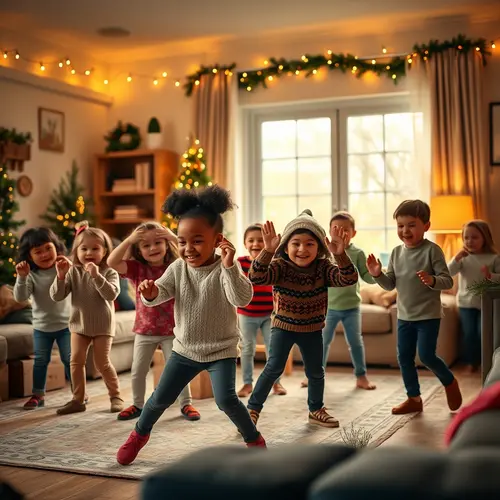
When holiday music stops, children freeze in position. This simple concept works for ages three through ten with minimal preparation. The game naturally incorporates movement breaks between more sedentary activities like gift opening or meals.
| Game Name | Best Age Range | Setup Time | Indoor/Outdoor | Group Size |
|---|---|---|---|---|
| Musical Chairs | 4-10 years | 5 minutes | Both | 6-15 kids |
| Scavenger Hunt | 5-12 years | 15 minutes | Both | 4-20 kids |
| Freeze Dance | 3-8 years | 2 minutes | Both | Any size |
| Pin the Nose | 4-9 years | 5 minutes | Indoor | 6-12 kids |
| Relay Races | 6-12 years | 10 minutes | Both | 8-24 kids |
Active Outdoor Holiday Kid Games
Snowball Toss Competitions
Use soft foam balls or rolled socks as “snowballs” for indoor safety. Set up buckets or laundry baskets at varying distances to accommodate different skill levels. This activity works equally well indoors or outdoors, requiring only open space and lightweight throwing objects.
Scoring systems should reward effort over perfection. Award points for attempts, bonus points for successful tosses, and special recognition for creative throwing styles. This approach keeps less coordinated children engaged rather than discouraged.
Holiday Relay Races
Design relay courses incorporating seasonal elements. Children might balance ornaments on spoons, waddle while holding balloons between knees, or race while wearing oversized holiday sweaters. These modifications add challenge without requiring athletic prowess.
Quiet Holiday Kid Games for Winding Down
Holiday Pictionary
Drawing games provide perfect transitions between high-energy activities and quiet time. Prepare cards with holiday-themed words appropriate for your group’s age range. Younger children draw items like “reindeer” or “cookie,” while older kids tackle concepts like “celebration” or “tradition.”
Teams work better than individual competition for this format. Children learn to support teammates rather than competing against friends, building social skills alongside artistic expression.
Story Building Circles
Each child adds one sentence to a collaborative holiday story. This game requires no materials and naturally calms excited children through focused listening. Stories often become hilariously creative, generating laughter without physical exertion.
Expert Tips for Successful Holiday Kid Games
Preparation determines success more than elaborate supplies. Have backup activities ready for different energy levels throughout your event. Children’s moods fluctuate during long gatherings, requiring flexible planning.
- Test game instructions on one child before gathering the full group
- Prepare stations for simultaneous activities when managing large groups
- Keep rules simple enough to explain in under 30 seconds
- Stock extra supplies for damaged or lost game pieces
- Designate a quiet recovery space for overstimulated children
- Brief adult helpers on specific roles before games begin
- Photograph setup steps for faster preparation at future events
Adapting Games for Mixed Age Groups
The biggest challenge with holiday kid games involves accommodating wide age ranges. Successful organizers create role differentiation within single activities. Older children mentor younger ones, building leadership skills while keeping toddlers engaged.
Consider partner systems pairing older with younger children. This arrangement allows complex games to include participants who couldn’t manage alone. The mentoring dynamic often produces touching moments parents remember long after holidays end.
Sensory-Friendly Modifications
Some children struggle with typical game elements like loud music, bright lights, or unexpected touches. Offering modified versions demonstrates inclusivity while expanding participation. Provide noise-canceling headphones, adjust lighting, or create clearly marked “safe zones” where children can observe without participating.
These accommodations benefit all children, not just those with diagnosed sensory sensitivities. Many kids appreciate having control over their involvement level during overwhelming holiday gatherings.
Budget-Friendly Holiday Kid Games
A persistent myth suggests effective holiday activities require expensive purchased games or elaborate decorations. Reality proves otherwise. The most memorable holiday kid games often use household items creatively repurposed.
Cardboard boxes become sleds for indoor races. Painter’s tape creates floor mazes or hopscotch patterns. Newspaper balls substitute for purchased equipment. Children care more about engaged adults and peer interaction than production value.
Safety Considerations
Excitement increases injury risk during holiday play. Establish clear boundaries before activities begin. Remove tripping hazards, secure loose rugs, and push furniture against walls. Designate specific adults to supervise rather than assuming everyone watches.
Keep first aid supplies accessible and ensure at least one adult knows their location. Brief helpers on allergy information for all attending children, particularly important when games involve food elements or prizes.
Creating Lasting Holiday Traditions
Repeat successful games annually to build family traditions. Children anticipate favorite activities and associate them with positive holiday memories. Photograph or video record games to document how children grow and change while traditions remain constant.
Some families create custom trophies or certificates for game winners, stored carefully and presented again each year. These tangible connections between past and present celebrations deepen holiday meaning beyond commercial aspects.
The most effective holiday kid games balance structure with flexibility, competition with cooperation, and excitement with inclusion. Focus on creating environments where children feel successful regardless of outcome. When kids remember feeling valued and entertained, they carry positive associations with holiday gatherings throughout their lives. Start with a few reliable activities, observe what resonates with your specific group, and build your repertoire gradually rather than overwhelming yourself with overly ambitious plans.

Hi, I'm Syarafull! I'm a sports enthusiast active in international youth organizations — today's sweat is an investment in the future. Here, I share guides on school sports, fitness, equipment, and peak-performance strategies. I have published 2,335 sports guides here since 2022.


More Stories
PE Games: 15 Essential Activities for Engagement
7 Essential Abilities Youth Fitness Programs Must Develop
5 Proven Wellness Games and Activities That Actually Work