
Table of Contents
What is the classic physical education and team-building activity known for its focus on listening, reaction speed, and strategy? The answer is the crows and cranes game. This deceptively simple game, rooted in decades of recreational and coaching curricula, serves as a foundational tool for developing fundamental motor skills, cognitive processing, and social dynamics within a group. Unlike complex sport simulations, its elegance lies in its minimal requirements—just an open space and attentive participants—yet its strategic depth offers layers of learning for players of all ages.
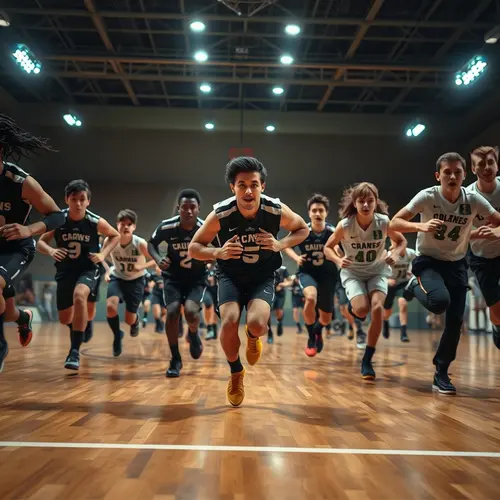
The core objective is straightforward. Participants are divided into two teams, typically labeled “Crows” and “Cranes.” They line up facing each other across a central line or space. A facilitator calls out one of the two team names. The members of the named team must turn and sprint to a safe zone behind them, while the opposing team gives chase, attempting to tag them before they reach safety. Those tagged before reaching the zone either join the opposing team or are temporarily out, depending on the chosen rule variant. The crows and cranes game thus becomes a live exercise in auditory processing, explosive movement, and spatial awareness.
Core Mechanics and Strategic Variations of the Crows and Cranes Game
While the basic rules are universally recognized, seasoned physical educators and camp directors often employ nuanced variations to adjust difficulty, focus, and learning outcomes. The standard drill emphasizes pure reactive speed. However, introducing a delayed auditory signal—such as elongating the word “Crrrr-anes!”—forces players to practice impulse control and focused listening, a technique often highlighted in motor learning whitepapers from institutions like SHAPE America. Another common adaptation involves assigning movement patterns; players might be required to skip, shuffle, or crab-walk to their safe zone, integrating specific skill development into the chase dynamic.
The strategic layer emerges in how teams manage risk and attention. A common pitfall for novice players is “leaning” or anticipatory movement, which can lead to false starts. The expert approach involves a balanced, athletic stance: weight centered, knees slightly bent, and focus locked on the caller’s voice rather than their anticipated command. This prepares the body for instantaneous movement in either direction, a principle directly borrowed from foundational sports agility training.
Building Cognitive Load and Advanced Play
To elevate the crows and cranes game beyond a simple warm-up, facilitators introduce cognitive loading. This involves adding secondary tasks or altering the calling system. For instance, a number might be called instead of a team name, with each number corresponding to a different action (e.g., “One” for Crows run, “Two” for Cranes run, “Three” for everyone freeze). This variation sharply increases the cognitive demand, training working memory and decision-making under pressure—skills critical in invasive team sports like basketball or soccer where play calls must be processed instantly amid chaos.
Another advanced method uses visual or combined stimuli. The caller might hold up a colored card while shouting a potentially mismatched command. Players must react only to the auditory signal, ignoring the visual distraction. This drill specifically trains selective attention and resistance to deception, mirroring the fakes and feints athletes encounter in competition. According to analysis in publications like the *Journal of Sports Science and Medicine*, such dual-task activities significantly improve an athlete’s ability to maintain technical performance while processing environmental cues.
| Variant | Primary Skill Focus | Complexity Level | Ideal Group Size |
|---|---|---|---|
| Classic Reaction | Auditory Processing, Linear Speed | Low | 10-30 |
| Movement Pattern (e.g., skipping only) | Specific Locomotor Skill, Coordination | Medium | 10-20 |
| Cognitive Command (numbers/colors) | Working Memory, Decision Speed | High | 8-16 |
| Team Swap (tagged players join other team) | Dynamic Strategy, Spatial Awareness | Medium | 15-40 |
Expert Application: From Playground to Professional Training
The true value of the crows and cranes game is revealed in its application across contexts. In youth physical education, it’s a tool for assessing and developing fundamental movement skills as outlined in national grade-level outcomes. For corporate team-building facilitators, it becomes a metaphor for communication breakdowns and quick, unified response to clear directives. The game exposes how a single misheard command can lead to half a team moving in the wrong direction, a powerful debriefing point for organizational workshops.
In athletic training environments, its utility is even more pronounced. Sports psychologists utilize modified versions to practice attention control under fatigue. A conditioning session might end with several rounds of the game, forcing athletes to execute sharp, reactive movements when physically exhausted—simulating the demands of a fourth quarter or final set. The game’s lack of equipment dependency makes it a staple in travel or limited-resource training situations, a fact frequently noted in coaching manuals from organizations like the National Federation of State High School Associations (NFHS).
Debunking a Common Myth and an Expert Opinion
A persistent misconception is that the crows and cranes game is only suitable for young children. This view underestimates the game’s scalability. The limiting factor is not age, but the facilitator’s ability to appropriately ramp up the cognitive and physical demands. With elite athletes, the distance between teams and to the safe zone is increased dramatically, turning the sprint into a true speed-endurance event. The caller might use a sound system with variable volume or incorporate sport-specific stances.
From an expert coaching perspective, the most common error in facilitation is inconsistent calling cadence. Callers often fall into a predictable rhythm, allowing players to guess the call rather than truly listen. The experienced facilitator varies the pause length between commands randomly, uses tonal inflection, and even incorporates silent pauses to keep neural engagement high. This transforms the activity from a game of chance to a rigorous drill in focus and reaction. The ultimate goal isn’t just to see who runs fastest, but to see which athletes can consistently marry correct perception with explosive action.
Key tactical takeaways for maximizing the game’s effectiveness include:
- Clear Demarcation: Use visible cones or lines for the center line and safe zones to prevent disputes.
- Safety First: Ensure the running surface is even and clear of obstacles. Emphasize controlled tagging (e.g., touch on shoulder) to avoid collisions.
- Strategic Grouping: For mixed-ability groups, consider pairing participants of similar speed during chases to maintain engagement and reduce injury risk.
- Dynamic Debrief: After a few rounds, pause to ask players what strategies they’re using to listen better or react quicker. This metacognitive step deepens the learning.
When integrated into a broader program, the crows and cranes game acts as a diagnostic tool. Coaches can observe which athletes hesitate, who anticipates correctly versus incorrectly, and how individuals handle the frustration of being tagged. These observations provide informal data on an athlete’s composure, reactivity, and coachability, informing more personalized training interventions later.
Its legacy in recreational and educational settings is secured by its unparalleled flexibility and pure focus on a critical athletic triad: listen, decide, move. From school gymnasiums to professional team facilities, the enduring utility of this simple format demonstrates that effective foundational training doesn’t require sophisticated technology. It requires a well-understood framework, a purposeful facilitator, and a group ready to engage. The crows and cranes game delivers precisely that, cementing its place as a timeless tool for building reactive agility and focused teamwork.

Hi, I'm Syarafull! I'm a sports enthusiast active in international youth organizations — today's sweat is an investment in the future. Here, I share guides on school sports, fitness, equipment, and peak-performance strategies. I have published 2,335 sports guides here since 2022.

More Stories
Youth Fitness: 7 Ways to Beat Chicken Fat for Kids
15 Proven Wellness Activities for High School Students
15 Fun PE Games for Preschoolers That Build Motor Skills