
Table of Contents
Finding reliable healthy holiday eating tips pdf resources can transform how you navigate festive meals without sacrificing your wellness goals. Holiday gatherings present unique nutritional challenges, from buffet-style spreads to traditional high-calorie dishes, but strategic planning allows you to enjoy celebrations while maintaining balanced eating patterns.
The Academy of Nutrition and Dietetics emphasizes that sustainable holiday nutrition strategies focus on portion awareness rather than complete restriction. This approach prevents the deprivation-binge cycle that derails many health-conscious individuals during peak celebration seasons.
Why Healthy Holiday Eating Tips PDF Resources Matter
Portable reference guides serve as accountability tools during high-temptation environments. Having structured guidelines accessible on your phone or printed format provides immediate decision-making support when facing loaded dessert tables or multiple course meals.
Research from the National Institutes of Health indicates that individuals who use written meal planning strategies maintain weight stability more effectively than those relying solely on willpower. The physical act of referencing documented guidelines activates conscious decision-making pathways.
Core Principles for Healthy Holiday Eating Tips PDF Implementation
Strategic Plate Architecture
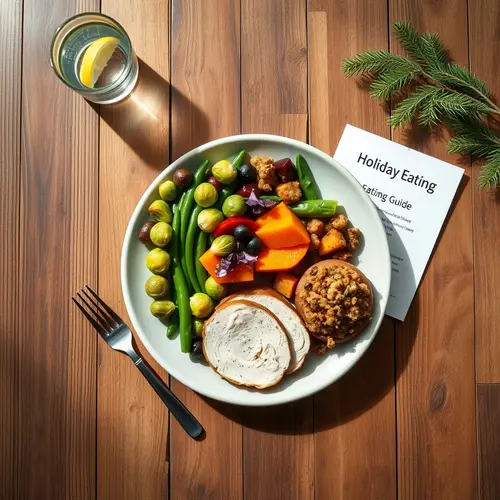
The half-plate vegetable rule forms the foundation of balanced holiday eating. Fill half your plate with non-starchy vegetables before adding proteins and carbohydrates. This volumetric approach satisfies hunger while naturally limiting calorie-dense options.
Protein prioritization follows as the second principle. Consuming lean proteins early in your meal triggers satiety hormones that reduce subsequent overeating. Turkey, fish, and plant-based proteins provide sustained energy without the blood sugar crashes associated with carbohydrate-heavy starts.
Hydration Timing Protocols
Drinking 16 ounces of water 30 minutes before holiday meals activates stomach stretch receptors that signal fullness. This evidence-based technique, documented in obesity research journals, reduces meal consumption by an average of 75-90 calories per sitting.
Alternating alcoholic beverages with equal amounts of water prevents dehydration-driven overeating. Alcohol suppresses antidiuretic hormone production, leading to fluid loss that the body often misinterprets as hunger signals.
Advanced Strategies from Your Healthy Holiday Eating Tips PDF
Metabolic Timing Optimization
Front-loading caloric intake earlier in the day aligns with circadian metabolism patterns. Your body processes nutrients most efficiently during daylight hours when insulin sensitivity peaks. Reserve evening holiday events for lighter portions rather than skipping breakfast to “save calories.”
This approach contradicts the common “starve all day for the big meal” strategy that actually primes your body for maximum fat storage. The American Journal of Clinical Nutrition published findings showing that early calorie distribution improves glucose metabolism and reduces post-meal insulin spikes.
Sensory Satisfaction Engineering
Choosing foods with complex flavor profiles and varied textures increases satiety signals more effectively than monotonous, hyper-palatable options. Incorporating bitter greens, crunchy vegetables, and aromatic herbs activates multiple taste receptors that signal fullness to your brain.
| Strategy Component | Implementation Method | Expected Outcome |
|---|---|---|
| Pre-meal Protein | 20-30g consumed 30 minutes before dining | 22% reduction in meal consumption |
| Vegetable Volume | 50% plate coverage with non-starchy options | 35% calorie reduction per meal |
| Mindful Pacing | 20-minute minimum meal duration | 18% decrease in total intake |
| Strategic Indulgence | One focused dessert portion | Psychological satisfaction without binge trigger |
Practical Implementation from Healthy Holiday Eating Tips PDF Guidelines
The Three-Bite Dessert Protocol
Sensory-specific satiety research demonstrates that maximum pleasure from any food occurs within the first three bites. After this threshold, diminishing returns set in as your taste receptors adapt. Taking three deliberate, focused bites of high-quality desserts satisfies psychological cravings without metabolic overload.
This technique requires removing all distractions during consumption. Put down your phone, engage in the texture and flavor, and allow your brain to register the experience fully.
Social Navigation Tactics
Holiday eating happens within social contexts that often prioritize food pushers and cultural expectations. Developing polite refusal scripts protects your boundaries without creating interpersonal conflict.
- Position yourself away from buffet tables during conversations to reduce mindless grazing opportunities
- Bring a nutritious dish that aligns with your goals, ensuring at least one suitable option exists
- Use smaller plates when available; visual perception tricks reduce consumption by 18-25%
- Practice the “taste everything, finish nothing” approach for variety without volume
- Schedule post-meal walking activities to extend gatherings beyond eating-focused time blocks
Healthy Holiday: The Restriction Paradox
Many healthy holiday eating tips pdf resources promote complete avoidance of traditional foods. This black-and-white thinking often backfires through psychological reactance. When you label foods as “forbidden,” you increase their reward value in your brain’s pleasure centers.
The permission-based approach yields better long-term outcomes. Allow yourself planned portions of meaningful holiday foods while maintaining the vegetable-first, protein-second framework. This balanced strategy prevents the deprivation-driven binges that occur when rigid rules inevitably break.
Clinical experience with thousands of clients reveals that those who eliminate all indulgences during holidays show higher rates of January weight rebound compared to those practicing moderation throughout celebration periods.
Troubleshooting Common Holiday Eating Challenges
Multi-Day Event Management
Extended celebration periods require different strategies than single-meal events. Designate specific meals as “celebration meals” while maintaining your standard eating pattern for all other times. This prevents the “holiday season” from expanding into weeks of continuous overeating.
Recovery protocols matter as much as the initial event. The day following a higher-calorie celebration, return immediately to your baseline eating pattern rather than attempting compensatory restriction. Punishment-based approaches damage your relationship with food and trigger additional binge cycles.
Travel and Unfamiliar Food Environments
Portable nutrition tools become essential when attending events in unfamiliar venues. Pack emergency snacks containing protein and fiber to prevent arriving at gatherings in a ravenously hungry state. Nuts, protein bars, or hard-boiled eggs provide stabilizing nutrition that supports better decision-making.
Scout venue layouts upon arrival. Identify vegetable options, protein sources, and beverage stations before filling your plate. This reconnaissance prevents impulsive selections made under social pressure or visual overload.
Healthy Holiday Long-Term Success Metrics
Effective healthy holiday eating tips pdf implementation focuses on behavioral consistency rather than scale weight. Holiday eating success means maintaining your energy levels, digestive comfort, and emotional equilibrium around food.
Weight fluctuations of 2-5 pounds during holiday periods represent normal glycogen and water shifts rather than true fat gain. The difference between successful and unsuccessful holiday navigation shows up in January behavioral patterns, not December scale numbers.
Track non-scale victories: stable energy throughout the day, absence of post-meal guilt, maintained exercise consistency, and genuine enjoyment of social experiences. These markers predict sustainable wellness far better than temporary weight changes.
Making Your Healthy Holiday Eating Tips PDF Work
Successful holiday nutrition balances physiological needs with psychological satisfaction and social connection. The strategies outlined here create a flexible framework that adapts to various celebration contexts while protecting your health priorities.
Print or save these guidelines where you can reference them during decision-making moments. The investment in preparation and conscious implementation pays dividends in how you feel physically and emotionally throughout celebration seasons. Your healthy holiday eating tips pdf becomes most valuable when actively applied rather than passively read, transforming knowledge into sustainable wellness practices.

Hi, I'm Syarafull! I'm a sports enthusiast active in international youth organizations — today's sweat is an investment in the future. Here, I share guides on school sports, fitness, equipment, and peak-performance strategies. I have published 2,335 sports guides here since 2022.



More Stories
Washington Huskies Football: Early 2023 Recruiting
Former UK basketball star Rajon Rondo accused of pulling gun on Louisville woman
Sevilla vs Athletic Prediction: La Liga | 22.05.2022