
Table of Contents
Youth fitness training builds the foundation for lifelong health and athletic performance when executed properly. Parents and coaches often wonder how to structure safe, effective programs that develop strength, coordination, and confidence without risking injury or burnout. The answer lies in understanding developmental stages and applying age-appropriate progressive overload principles.
The landscape of training young athletes has shifted dramatically. According to the American Academy of Pediatrics, properly supervised strength training can benefit children as young as seven or eight years old. This contradicts the outdated myth that resistance training stunts growth—a belief thoroughly debunked by multiple peer-reviewed studies.
Why Youth Fitness Training Requires Specialized Knowledge
Children are not miniature adults. Their skeletal systems, nervous systems, and hormonal profiles demand fundamentally different training protocols. Growth plates remain open until late adolescence, making proper form and load management non-negotiable.
The National Strength and Conditioning Association emphasizes that prepubescent athletes respond better to neural adaptations than hypertrophy. This means technique mastery and movement quality should dominate programming decisions over absolute load.
Critical Developmental Windows in Youth Fitness Training
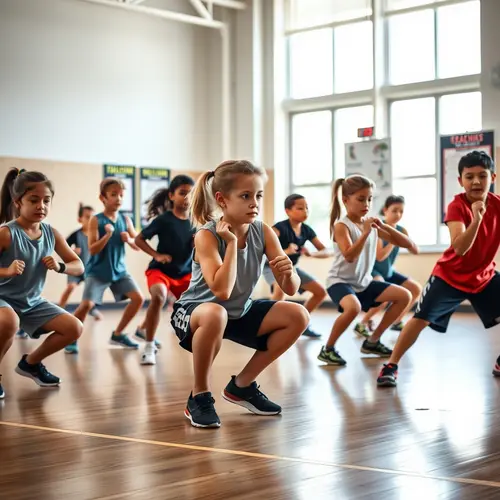
Between ages 6-12, children experience peak neuroplasticity for motor skill acquisition. This window represents the optimal period for teaching complex movement patterns—squatting mechanics, landing techniques, and throwing motions. Miss this window, and athletes may never achieve the same movement efficiency.
Adolescence brings dramatic hormonal changes. Testosterone and growth hormone surge during puberty, creating an accelerated adaptation response to resistance training. Programs must scale intensity appropriately during these growth spurts to prevent overuse injuries.
| Age Range | Primary Training Focus | Rep Range | Key Safety Consideration |
|---|---|---|---|
| 6-9 years | Bodyweight mastery, coordination | 12-15 reps | No external loading beyond bodyweight |
| 10-12 years | Movement patterns, light resistance | 10-15 reps | Goblet squats, medicine balls only |
| 13-15 years | Progressive loading, power development | 6-12 reps | Monitor growth plate stress, adjust volume during growth spurts |
| 16-18 years | Sport-specific strength, advanced techniques | 4-12 reps | Screen for structural imbalances, manage training density |
The Seven Non-Negotiable Principles
1. Movement Quality Over Quantity
Every repetition in youth fitness training serves as a practice repetition. Poor movement patterns rehearsed hundreds of times become neurologically hardwired. Video analysis should be standard protocol, not a luxury.
Coaches must identify and correct compensatory patterns immediately. Knee valgus during landing, lumbar hyperextension during overhead pressing, or asymmetrical loading during single-leg work all predict future injury risk.
2. Build Work Capacity Before Intensity
Young athletes often lack the aerobic base to support high-intensity training. Jumping straight into metabolic conditioning or maximal strength work without foundational work capacity creates a recipe for overtraining.
Programs should dedicate 8-12 weeks to general physical preparation. This phase emphasizes sub-maximal effort, varied movement, and building connective tissue resilience before introducing sport-specific demands.
3. Prioritize Posterior Chain Development
Modern youth spend excessive time seated, creating anterior dominance and weak posterior chains. Effective youth fitness training deliberately overemphasizes hip hinge patterns, hamstring strengthening, and thoracic extension work.
Romanian deadlifts, Nordic hamstring curls, and sled pulls should appear in programs with significantly higher frequency than bench pressing or bicep curls. This imbalance correction prevents anterior cruciate ligament injuries and improves athletic power output.
4. Implement Structured Warmup Protocols
Dynamic warmups are not optional. A proper pre-training sequence activates dormant musculature, improves range of motion, and primes the nervous system for explosive activity.
- Foam rolling major muscle groups (quadriceps, latissimus dorsi, thoracic spine)
- Dynamic stretching through full ranges of motion (walking lunges, leg swings, arm circles)
- Movement preparation drills (A-skips, shuffles, backpedaling)
- Progressive intensity activation (jump rope, medicine ball throws)
5. Manage Training Volume Intelligently
The Centers for Disease Control reports that overuse injuries in youth sports have increased substantially. Single-sport specialization and year-round training without adequate recovery drive this epidemic.
Youth fitness training programs must account for external stress from school sports, club teams, and recreational activities. Total weekly training volume should rarely exceed 12-15 hours for athletes under 16, with mandatory rest days built into programming.
6. Develop Multidirectional Movement Competency
Athletic development requires mastery in all planes of motion. Sagittal plane dominance (forward/backward movement) creates predictable injury patterns when lateral or rotational demands appear unexpectedly.
Programs should incorporate lateral shuffles, crossover steps, rotational medicine ball work, and multidirectional plyometrics. This builds robust movement literacy that transfers across all sports and life activities.
7. Track Metrics Beyond Performance
Monitoring jump height and sprint times provides incomplete data. Comprehensive youth fitness training tracking includes subjective wellness markers—sleep quality, appetite, mood, perceived recovery, and academic stress levels.
The Hooper Index or similar wellness questionnaires identify athletes trending toward overtraining before performance decrements appear. Prevention beats intervention in youth development contexts.
Expert Opinion: The Specialization Trap
After working with hundreds of youth athletes, the most common mistake I observe involves premature sport specialization. Parents believe focused, year-round training in a single sport creates competitive advantages. Research from the Aspen Institute demonstrates the opposite—early specializers face higher injury rates and earlier dropout from sports entirely.
Multi-sport participation until age 14-15 develops broader movement vocabularies, reduces overuse injuries, and maintains intrinsic motivation. The best collegiate and professional athletes typically specialized later, not earlier, in their development.
Common Programming Errors to Eliminate
Many well-intentioned programs replicate adult training templates scaled down for youth. This approach ignores fundamental physiological differences and creates unnecessary risk.
- Implementing maximal strength testing protocols with athletes under 14
- Prescribing high-volume eccentric training without appropriate tissue conditioning
- Neglecting unilateral exercises that expose and correct bilateral asymmetries
- Programming Olympic lifting variations without adequate technical mastery
- Focusing on hypertrophy-specific protocols in prepubescent populations
Building Long-Term Athletic Development
Sustainable youth fitness training extends beyond quarterly performance gains. Programs should cultivate movement competency, injury resilience, and genuine enjoyment of physical activity. These qualities compound over decades, creating healthier adults regardless of competitive outcomes.
The most successful programs blend structured skill development with unstructured play. Allocating 20-30% of training time to games, challenges, and creative movement exploration maintains engagement while developing athletic creativity and problem-solving abilities.
Implementation Checklist for Coaches and Parents
- Obtain medical clearance and screen for previous injuries before program start
- Establish baseline movement assessments using standardized protocols
- Create periodized training plans with planned deload weeks every 3-4 weeks
- Maintain detailed training logs tracking volume, intensity, and wellness markers
- Schedule quarterly movement reassessments to track progress and identify concerns
- Communicate regularly with other coaches to manage total training load
- Prioritize sleep hygiene and nutrition education alongside training protocols
Effective youth fitness training represents an investment in long-term health and performance. Programs built on developmental science, progressive loading principles, and individualized programming create resilient athletes who maintain active lifestyles well beyond competitive years. The focus must remain on process over outcomes, skill mastery over immediate results, and sustainable development over short-term performance spikes.
Hi, I'm Syarafull! I'm a sports enthusiast active in international youth organizations — today's sweat is an investment in the future. Here, I share guides on school sports, fitness, equipment, and peak-performance strategies. I have published 2,335 sports guides here since 2022.



More Stories
PE Games: 15 Essential Activities for Engagement
5 Proven Wellness Games and Activities That Actually Work
The Rise of Ionine: The Future of Athletic Performance