
Table of Contents
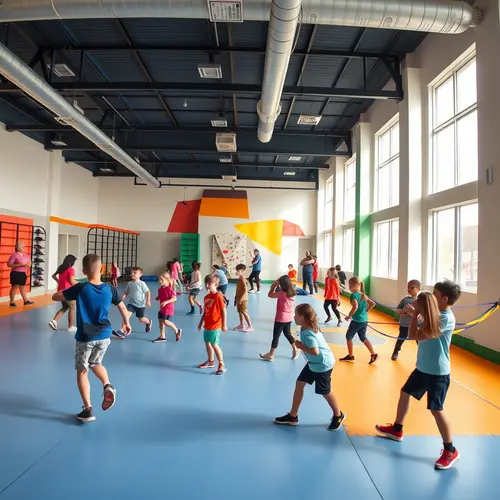
A youth fitness zone open gym provides unstructured physical activity time where young athletes and active kids can explore movement, build skills, and exercise without the rigid format of traditional classes. Unlike scheduled sports practices or instructor-led sessions, open gym empowers children to direct their own physical development through self-selected activities, equipment exploration, and creative play.
What Makes a Youth Fitness Zone Open Gym Different
Open gym sessions operate on a fundamentally different model than structured programming. Participants choose their activities from available equipment and space, creating personalized workout experiences tailored to their interests and developmental needs.
The Physical Activity Guidelines for Americans, established by the Department of Health and Human Services, recommend children engage in 60 minutes of moderate-to-vigorous physical activity daily. Open gym formats help meet this threshold by removing barriers that make traditional classes intimidating for some youth.
Facilities typically designate specific time blocks for different age groups, ensuring developmentally appropriate equipment access and peer interaction. Common age brackets include 6-9 years, 10-13 years, and 14-17 years.
Core Components of Effective Youth Open Gym Programs
Equipment Diversity and Accessibility
High-quality youth fitness zone open gym environments stock varied equipment that addresses multiple fitness domains. This includes cardiovascular machines scaled for smaller bodies, functional training tools like agility ladders and resistance bands, and sport-specific gear such as basketballs and soccer goals.
The American College of Sports Medicine emphasizes the importance of variety in youth programming to prevent overuse injuries and maintain engagement. Equipment rotation keeps experiences fresh and challenges different muscle groups and movement patterns.
Supervision Without Micromanagement
Trained staff monitor safety and provide guidance when requested, but avoid hovering or controlling every interaction. This balance allows youth to develop autonomy and decision-making skills while maintaining a secure environment.
Staff typically hold certifications in youth fitness instruction, CPR, and first aid. Their role involves equipment orientation, conflict mediation, and emergency response rather than constant direction.
Seven Documented Benefits of Youth Fitness Zone Open Gym Participation
| Benefit Category | Specific Outcomes | Supporting Research Area |
|---|---|---|
| Physical Development | Enhanced motor skill proficiency, improved cardiovascular endurance, increased muscular strength | Pediatric Exercise Science |
| Social Skills | Peer interaction practice, teamwork in informal settings, conflict resolution | Developmental Psychology |
| Mental Health | Reduced anxiety symptoms, improved mood regulation, stress management | Sports Psychology |
| Autonomy Building | Self-directed learning, goal-setting practice, intrinsic motivation development | Self-Determination Theory |
| Physical Literacy | Movement vocabulary expansion, body awareness, spatial orientation | Kinesiology |
| Injury Prevention | Cross-training benefits, overuse injury reduction, movement pattern variety | Sports Medicine |
| Lifelong Habits | Positive exercise associations, sustainable fitness routines, activity enjoyment | Behavioral Health |
Physical Literacy Through Exploration
Physical literacy refers to competence, confidence, and motivation to engage in physical activities. Youth fitness zone open gym sessions accelerate physical literacy by allowing experimentation without performance pressure.
Children discover preferences organically. A youth intimidated by team sports might excel at rock climbing or rowing. Another might combine elements from multiple disciplines into unique workout routines that sustain long-term engagement.
Social Development in Low-Pressure Settings
Unstructured environments facilitate natural social interaction. Youth practice communication, negotiation, and cooperation without adult-imposed team structures. These organic relationships often prove more resilient than those formed in competitive settings.
Research published in journals focusing on youth development consistently demonstrates that mixed-age peer interactions during physical activity strengthen social competence more effectively than same-age groupings.
Optimal Programming Structure for Facilities
Session Duration and Frequency
Most effective youth fitness zone open gym programs offer 90-minute sessions at minimum. Shorter blocks limit exploration depth, while excessively long sessions may exceed attention spans for younger participants.
Frequency matters more than duration. Three weekly sessions produce better outcomes than single marathon sessions. Consistency builds habit formation and allows progressive skill development.
Safety Protocols and Risk Management
Comprehensive waivers address liability concerns while pre-session orientations familiarize participants with equipment and facility rules. Clear boundaries delineate acceptable behavior without stifling creativity.
- Mandatory pre-participation health screening questionnaires
- Equipment demonstrations before unsupervised use authorization
- Visible emergency response protocols and accessible first aid stations
- Graduated equipment access based on demonstrated competency
- Ratio maintenance of one supervisor per 15-20 participants
Youth Fitness Zone Open Gym: Debunking the “Structure-Only” Myth
A persistent misconception suggests youth require constant instruction and structured programming for fitness benefits. This outdated view ignores substantial evidence supporting self-directed physical activity.
Dr. Amanda Stanec, whose research examines unstructured play benefits, notes that overly structured environments can suppress intrinsic motivation. When every movement gets dictated by adults, children miss critical opportunities to develop internal drive and creativity.
The youth fitness zone open gym model respects developmental needs for autonomy while providing necessary safety frameworks. This balance produces superior long-term adherence compared to programs where external control dominates.
Practical Implementation: A Case Study
Consider a community recreation center that transitioned 40% of youth programming from instructor-led classes to open gym formats. Initial parent resistance emerged due to concerns about “lack of structure.”
After six months, attendance data revealed participation increased 63% during open gym slots compared to previous structured class attendance. Exit surveys indicated youth appreciated choice, reduced performance anxiety, and opportunities to pursue specific interests.
The facility maintained structured classes for skill-specific instruction while recognizing open gym fulfilled different but equally valuable developmental needs.
Maximizing Your Youth Fitness Zone Open Gym Experience
For Parents and Guardians
Resist the urge to direct your child’s activity choices during sessions. Observation without interference allows genuine interest discovery. Many parents report surprise when children gravitate toward activities never previously expressed.
Ask open-ended questions afterward: “What did you try today?” or “What would you like to work on next time?” This reinforces internal motivation rather than seeking external approval.
Youth Fitness Zone Open Gym – For Youth Participants
Set personal challenges rather than comparing yourself to peers. Open gym excels at individualized progression tracking. Perhaps you complete five pull-ups this month versus three last month, independent of what others accomplish.
Experiment with unfamiliar equipment. Initial awkwardness signals learning opportunities rather than inadequacy. Physical literacy expands through varied movement exposure.
The youth fitness zone open gym represents an evidence-based approach to youth physical development that complements traditional structured programming. By providing autonomy within safe boundaries, these sessions cultivate intrinsic motivation, physical literacy, and sustainable fitness habits that extend far beyond childhood.
Facilities implementing open gym formats address diverse youth needs while parents gain valuable alternatives to over scheduled, adult-directed activities. The model respects developmental psychology principles while delivering measurable health and wellness outcomes supported by exercise science research.

Hi, I'm Syarafull! I'm a sports enthusiast active in international youth organizations — today's sweat is an investment in the future. Here, I share guides on school sports, fitness, equipment, and peak-performance strategies. I have published 2,335 sports guides here since 2022.

More Stories
How to Choose Sports Equipment: A Practical 9-Point Checklist
Youth Fit for Life: 7 Essential Principles
Skinny Fit Super Youth Powder: Complete Expert Guide