
Table of Contents
The greatest utility players in MLB history rarely get the credit they deserve. They fill whatever hole the lineup has, move from second base to center field, and make a manager’s job easier without chasing headlines. This list ranks the ten most versatile players who mastered that role, from Rance Mulliniks to Ben Zobrist.
What Makes the Greatest Utility Players in MLB History Different?
A utility player is not simply a bench player who owns several gloves. The best utility players can start at three or more positions without becoming a defensive liability, and they hit enough to stay in the lineup. That combination is rare because most players spend years learning one position.
The greatest utility players in MLB history also carried a mental edge. They learned opposing scouting reports, understood every cut-off play, and stayed ready for a late-inning switch. Managers trusted them in October because they could solve a matchup problem without burning a roster spot.
10. Rance Mulliniks
Rance Mulliniks may not be a household name today, but during his career he was one of the top utility infielders in the game. He came up as a shortstop, learned third base, and eventually moved all over the infield. He played 16 seasons in the majors, mostly with the Toronto Blue Jays.
For his career, Mulliniks hit .272 with 435 RBI despite modest power. He made his living by making consistent contact and by being flexible enough to cover whatever position the Blue Jays needed.
9. Mariano Duncan
Mariano Duncan is usually remembered as a shortstop and second baseman, and he was an All-Star in 1994. During his career, though, he started at least one game at every position except pitcher and catcher. That range turned him into a valuable piece on contending teams.
Duncan was never known as a power hitter or a great offensive force, but he was a slick fielder wherever he was placed. He played 13 seasons in the majors and helped his teams win the World Series twice, with the 1990 Reds and the 1996 Yankees.
8. Chone Figgins
Chone Figgins did not have much power, but he could hit for average and play his position wherever the Los Angeles Angels needed him. He played mostly third base, though he spent significant time at second base and in center field. By the end of his career he had played everywhere but first base, pitcher, and catcher.
Figgins was a career .276 hitter and stole 341 bases over 12 seasons. He was an All-Star in 2009 and led the American League in stolen bases in 2005, which helped earn him recognition as one of the greatest utility players in MLB history.
7. Tony Phillips
Tony Phillips played 18 seasons during the 1980s and 1990s and was one of the finest utility players of his era, long before the role received much attention. He came up as a second baseman, which remained his primary position, but he had no problem playing shortstop or third base.
Phillips also made more than 100 appearances in the outfield. He was never an All-Star, yet he was a career .266 hitter with strong on-base skills, and he stayed in the league for 18 seasons with seven different teams.
6. Matt Carpenter
During his 11 seasons with the St. Louis Cardinals, Matt Carpenter moved among first base, second base, and third base, with the hot corner as his main home. From 2012 to 2018 he was an excellent offensive player, winning the Silver Slugger Award in 2013 and making three All-Star teams.
Even when his offensive production declined, Carpenter remained valuable because of his versatility. He played the outfield and even appeared as a pitcher in 2021, doing whatever the roster required.
5. Martin Prado
Most consider Martin Prado a third baseman, but he was a true utility player. By the end of his career he had played every position except pitcher, catcher, and center field. In his later years he moved seamlessly among third base, second base, and left field, which helped him last 14 seasons.
The Venezuela native was also a good hitter. He made the 2010 All-Star team and finished his career with 100 home runs and a .287 batting average.
4. Chris Taylor
The super-utility label was made for players like Chris Taylor. From the start of his career he embraced the role, and he is good enough defensively to play all three outfield positions, third base, shortstop, and second base. Most of his time has come at shortstop or in center field, which is why he is so valuable.
Offensively, Taylor has been a steady hitter and has not been afraid of the big stage. He earned NLCS MVP honors in 2017, made the All-Star team in 2021, and helped the Dodgers win the World Series in 2020 and 2024.
3. Jose Oquendo
Jose Oquendo spent much of his time as the middle-infield partner to Ozzie Smith, but he is best known for his remarkable versatility. A brilliant defensive second baseman and a solid shortstop, Oquendo could handle any position. In 1988 he played all nine positions in a single game, a rare feat that made him a cult hero in St. Louis.
No matter where he was placed, Oquendo was excellent with the glove. He even spent time behind the plate and pitched, which made him one of the few players in big league history to play all nine positions. He batted .256 for his career, doing just enough offensively to prove himself useful.
2. Placido Polanco
Placido Polanco deserves to be considered among the best MLB utility players of all time. He was also one of the most underrated second basemen of his generation. A two-time All-Star, he won ALCS MVP honors in 2006 and a Silver Slugger Award in 2007.
For his career, Polanco batted .297 with more than 2,100 hits. In addition to being a fine second baseman, he was an accomplished third baseman who could also handle shortstop. He won Gold Gloves at two different positions and retired with the best all-time fielding percentage at both second base and third base.
1. Ben Zobrist
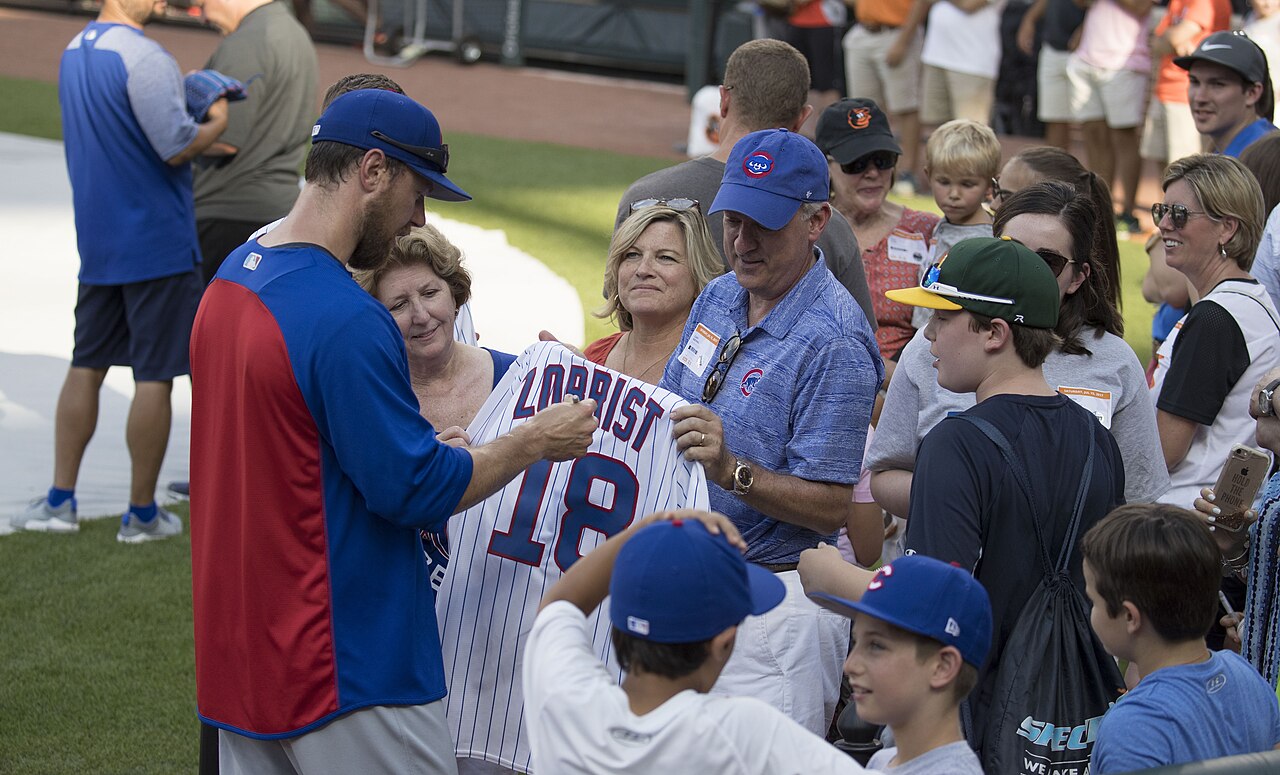
Ben Zobrist will likely be remembered as one of the most versatile players in baseball history. Even though he was mostly a second baseman, his managers had no problem moving him all over the diamond. He saw plenty of time in the outfield and could handle shortstop, earning him the super-utility title.
Zobrist was a switch-hitter and one of the most patient hitters of his era. Unlike most utility players, he made enough of an impact to be a three-time All-Star. It is no coincidence that he won the World Series in back-to-back years with two different teams late in his career, and he was named MVP of the 2016 World Series. His full statistics are archived at Baseball Reference.
That combination of defense, patience, and October production is why he tops our list of the greatest utility players in MLB history. He was a functional player who always played winning baseball.
How We Ranked the Greatest Utility Players in MLB History
We weighed positional range, defensive competence, longevity, offensive value, and postseason impact. A player who could capably start at shortstop and center field ranked higher than one who merely filled in at a corner. We also considered how often each player was trusted in October, when a single defensive mistake can end a season.
Why Utility Players Matter in Modern MLB
Modern rosters carry eight or nine relief pitchers, which leaves little room for a traditional four-man bench. A utility player who can cover three infield spots and two outfield spots effectively saves a roster spot. That flexibility lets a manager carry an extra pitcher, protect a young hitter, or exploit a platoon advantage without exposing a weakness.
The role also matters in October. Short series are full of late-inning matchups, and a versatile defender lets a manager double-switch without losing coverage. The players on this list were valuable in the regular season, but their range became even more important in the playoffs.
Related Reading
- Most overrated MLB players of all time
- Ranking the 25 best individual MLB seasons
- 10 longest hitting streaks in MLB history
Frequently Asked Questions
Who are the greatest utility players in MLB history?
Ben Zobrist tops most lists, followed by Placido Polanco, Jose Oquendo, Chris Taylor, and Martin Prado. The exact order depends on whether you value peak defense, longevity, or postseason impact.
What is the difference between a utility player and a super-utility player?
A utility player can fill in at several positions. A super-utility player does it well enough to start regularly, often moving between the infield and outfield without a drop in defense.
Who played all nine positions in MLB?
Jose Oquendo played all nine positions in a single game in 1988. Several other players have done it, but Oquendo is the most famous utility-player example.
Hi, I'm Syarafull! I'm a sports enthusiast active in international youth organizations — today's sweat is an investment in the future. Here, I share guides on school sports, fitness, equipment, and peak-performance strategies. I have published 2,335 sports guides here since 2022.



More Stories
Unlock Brilliant Results: The Fitness Plans Guaranteed to Elevate Your Strength Fast
Discover Incredible Energy: The Most Popular Fitness Programs Transforming Lives Today
Vibrant Strength: Game-Changing Gym Color Schemes Designed to Ignite Performance